
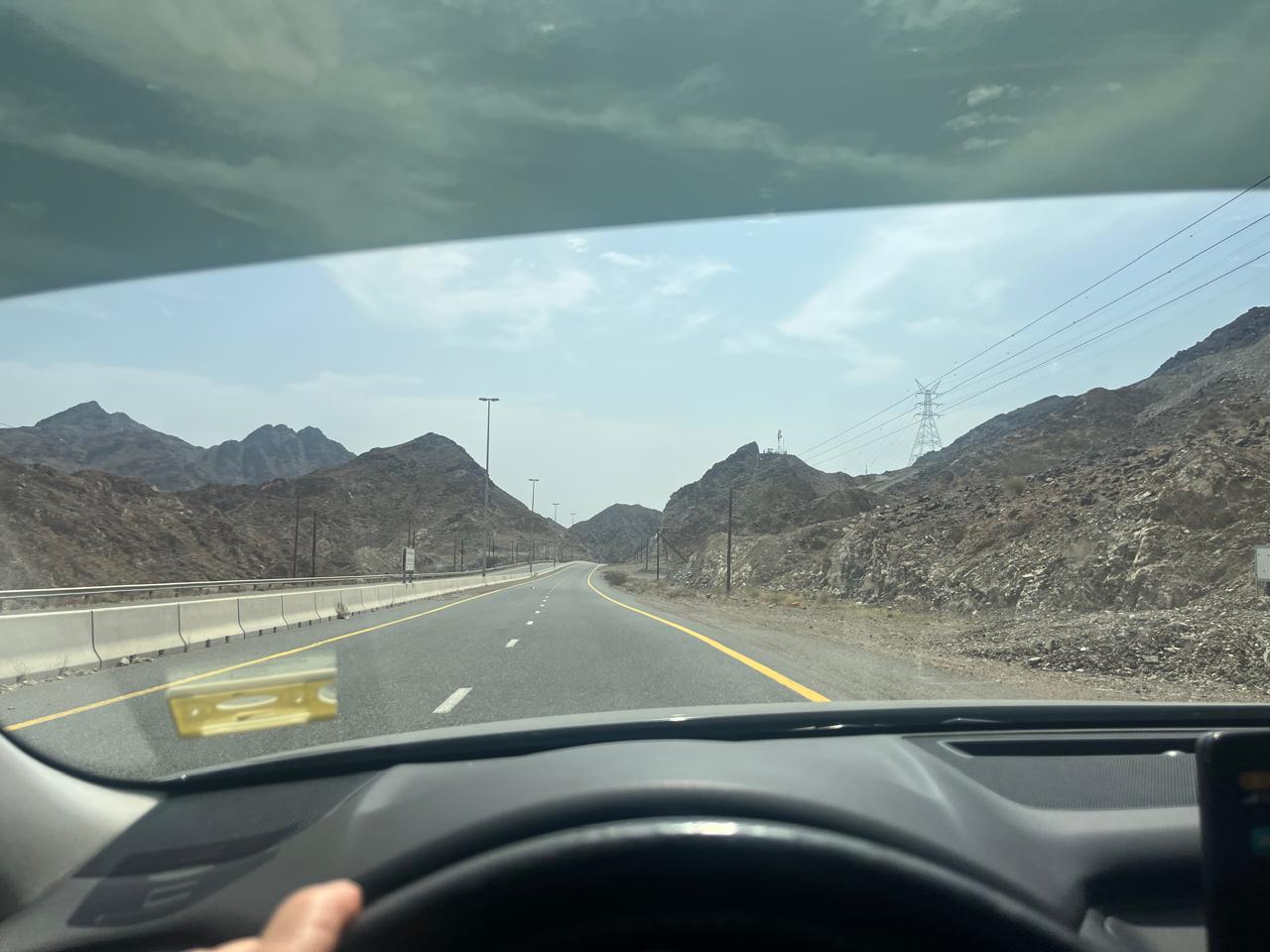
It’s hard knowing what to pack when you aren’t sure if you’re leaving for one week, two weeks, or forever. It’s even harder when you’re sleep-deprived, anxious, packing for three, and unsure of what awaits at the end of the road.
Each time I started shoving things into the cases, I tried to prioritize between what I needed, what I wanted, and what I couldn’t be without, like hair conditioner, children’s books, and a copy of The Bitcoin Standard. Then, I emptied it all out again, realizing I could live without it all: none of it had any meaning beyond the remnants of a life we’ve built here.
But we needed supplies. After the intensity of emotions and night after night of hearing missiles being intercepted overhead, I had elected the quietest-looking place I could find, tucked away in a remote corner of eastern Oman, a fishing village with no shopping centers, no Deliveroo, not an awful lot of people, and, best of all, no missile attacks from Iran.
As we left the house, I tried to balance boxes of food, drinks, snacks, and various kitchen supplies in my arms, while tugging three suitcases in tow. The kids, who are usually oblivious to my needs and the multiple logistics going on around them, insisted on helping me to the car, lugging heavy bags and trying to wheel too much weight down the ramp. I couldn’t love them more, I thought.

About a week ago, as I was learning wartime survival skills from the Lebanese and adapting to life with the booms, I didn’t have plans to leave. I didn’t want to travel, in fact, not by plane anyway, and the kids were doing well, more caught up in online learning than worrying about the war. But then the situation worsened. It went from being a game for them to something entirely more real. It was time to leave, for a while.
Going old school: Driving with no GPS
As we pulled out of the apartment complex, I entered “Muscat, Oman,” into Waze. After waiting for the icon to stop spinning, it finally said: “Couldn’t calculate route.” I tried again, wondering if my data was down. Maybe Muscat was too far; I entered the Hatta border crossing instead. Nothing.
I resorted to Google Maps, which I absolutely hate because the arrow faces backward on the display and it tells me unhelpful things like “head northwest,” as if I went about my daily life with a compass in my pocket. According to Google Maps, my car was currently in the middle of the ocean. I let out my first expletive of the journey, and we had barely made it to the end of the road.
What was happening? I called a friend to see if he knew what was going on. “The GPS signals are blocked because of the drones,” he said. “You will have to go old school.”
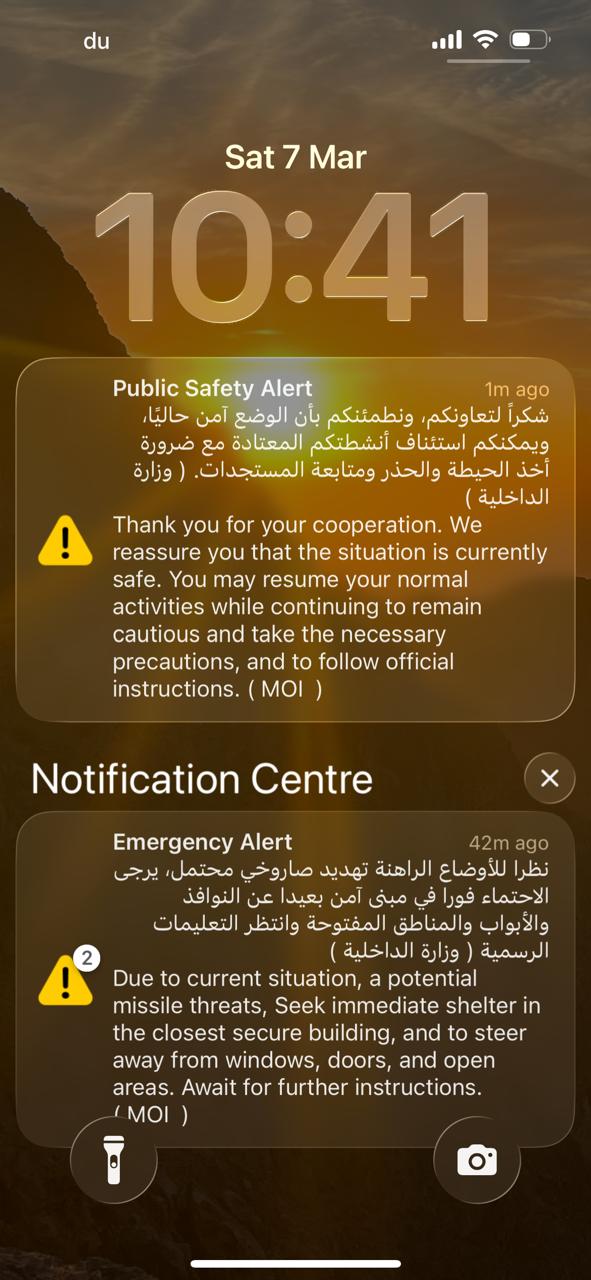
Those seven words were even scarier than an emergency alert about missile attacks from the MOI. I gulped. I can barely make it to the end of the road without my satellite navigation. How in the hell would I make it all the way to Oman? That alone almost stopped me in my tracks, along with the sleepless night and uncertainty if I was making the right call. That’s one of the hardest things about parenting alone: the ultimate decision is yours, and the responsibility is crushing.
But the car was loaded, and the kids were ready. Not leaving now wasn’t an option. I pulled into a layby to breathe for a while, asking myself if I could really drive blind, as a knot formed in the pit of my stomach.
Following the signs to the border
Even the usually bright sunny UAE skies were overcast and a little brooding as I started to drive and follow signposts instead of a screen. Since the incident the other day, when we were driving to one of our favorite restaurants and the anti-missile launcher began shooting fireballs into the sky horrifyingly close to us, I hadn’t wanted to drive any more long distances, and the thought of five hours on the road made me anxious.
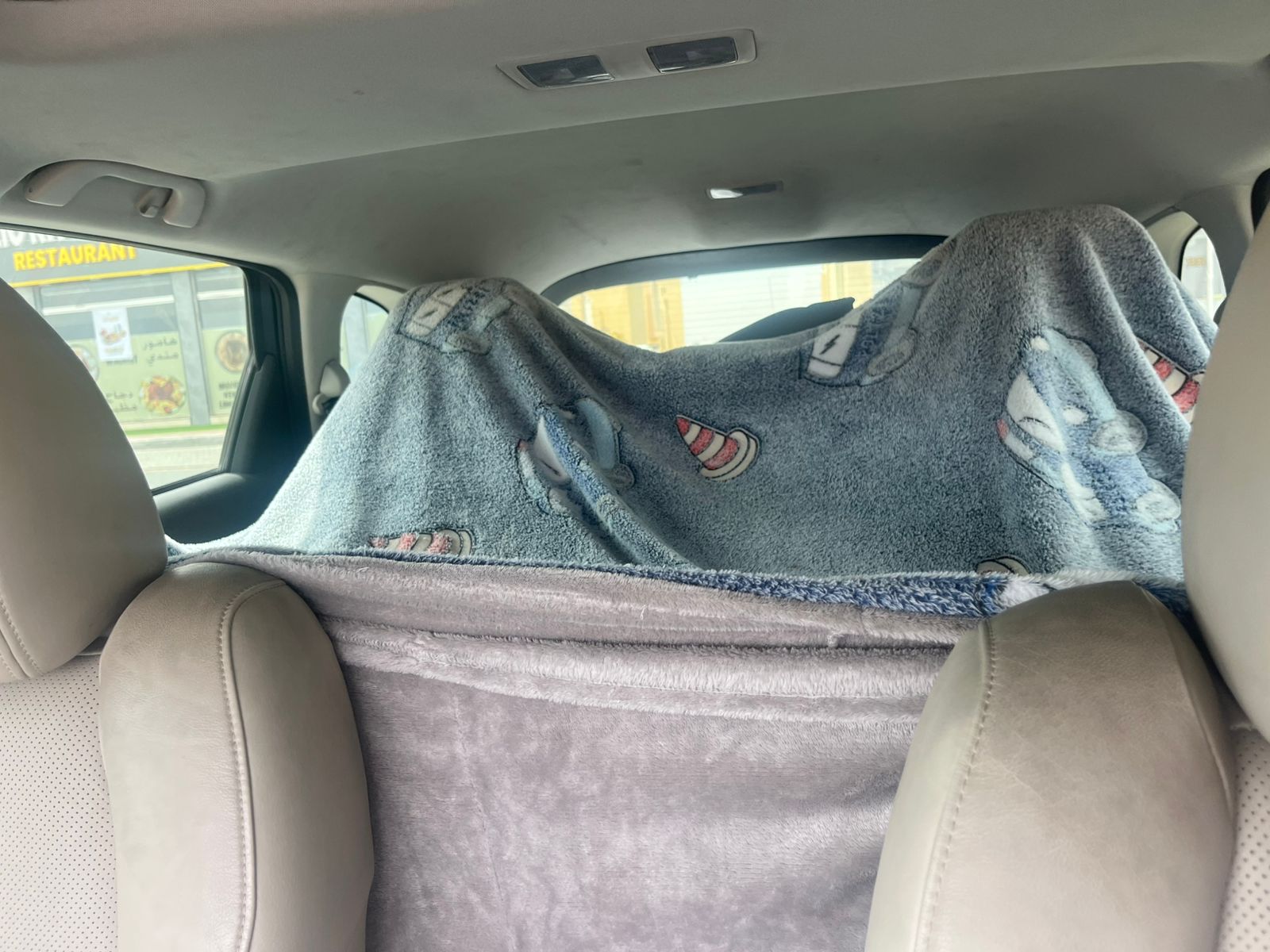
I glanced up at the sky nervously and the kids built an anti-missile fort in the back of the car with blankets and pillows.
I had to start driving the long way, since I had no clue how to reach the Hatta border without a map. I took a couple of wrong turns, inevitably, adding more time to the journey and provoking more expletives, until suddenly, Google Maps spluttered back into life the further we got from the coast.
I almost wept, and didn’t bother to check the route it calculated for us, or notice that it was guiding us to a different border crossing than I thought, adding an hour or so more to our trip.
As we got further away from Dubai and golden sands gave way to a darker, more orange terrain, the small businesses on the side of the road selling plants and flowers, ceramics and fruits, gave off a comforting sense of normalcy, and my frayed nerves started to calm. Angry black mountains punctuated the earth, and the road became more winding as we drove deeper into the emirate’s interior.
I couldn’t help but notice that no other cars were going our way. After being advised to leave before dawn (as if 5 am departures were that easy with two kids), we left the house around 9 and reached the Kalba border around 11:30. I was fully expecting chaos and lengthy delays at passport control as thousands of residents rushed to leave.
But it wasn’t like that at all; in fact, there were only a handful of people in front of us, fewer than a typical weekend, looking irritated at the Moroccan lady at the counter, who clearly had some issues with her documents and was stating her case loudly to be let through. The Omani policeman looked exhausted. “So many people coming to Oman,” he said, “probably you see someone you know.”
The kindness of strangers
Crossing borders always makes me nervous. While these Arabian countries are a far cry from the roiling chaos of Mexico and Central American countries, where chicken buses burst at the seams with the strangest collection of people and their animals, plastic sacks full of tamales, Coca-Cola in plastic bags, and rosaries draped around their necks, there is still almost always some issue when crossing here.
The rules are fluid and discretionary, and change so quickly that even the border officials can’t keep up. Fortunately, I always seem to find someone in charge who will break them. As the Moroccan lady departed and I handed the policeman our documents, he returned my Mulkiya (car registration) almost immediately.
“It expired,” he sighed, “one week ago.” My heart sank, knowing in that instant what those words meant; there would be no crossing into Oman today. Between the missiles and the online schooling, I hadn’t had a chance to renew it last week, and I was told it wasn’t an issue to wait.
“They said I could renew it any time in the next 12 months, and there would be just a small fine,” I whimpered, tossing the words together into something like a sentence, with my heart thumping in my chest.
He paused for a while and rubbed his forehead with his palms. “I will help you,” he said, looking at the children, “these are not good times.”
I could feel the tears welling in my eyes and wanted to leap over the glass counter and hug him.
“But you not spend long in Oman, yes? One week only.”
“I booked for two weeks,” I reply.
“Two week?” He tutted and sighed again, “Ok, two week, not more, after that, kallas, back to Dubai, renew car, and come back, no problem.”
I nodded and thanked him for this kindness.
The option of staying in Oman any longer was now off the table, then, leaving only plan A (stay two weeks and return home with the war ended and a distant memory to tell the grandkids), and plan B (fly out from Muscat and leave the Middle East burning behind). I shuddered at plan B.
Let’s face the music and dance
Driving through the last border control with the barrier closing down behind us, we were officially in Oman. I cried spontaneously, again, then reached for my phone to send a few messages and search for a soothing song. My soundtrack of choice over the last two weeks has been Frank Sinatra, Louis Armstrong, Nat King Cole, and Dean Martin, on repeat.
“There may be trouble ahead, but while there’s moonlight and music and love and romance, let’s face the music and dance… before they ask us to pay the bill, and while we still have the chance, let’s face the music and dance…”
I don’t know why, but the soothing tones of these timeless crooners make me feel safer, and they remind me of my grandparents, long passed. For the first time in my life, I understand what it might have been like for them during the war.
My experience is incomparable; of course, the sensational reports in outlets like Sky News and The Mirror about fire and brimstone raining down on Dubai, or people driving “across deserts” to escape, are not just hyperbolic but flagrantly false.
We were hardly leaving a fully blown warzone, and while the roads do wind through desert landscapes, I can assure you, they are quite nicely paved, no need for offroading at all. It is more the lurking uncertainty, and the fact that, while it is unlikely to happen, you could get hit by falling shrapnel, or a drone could explode in the village where your children go to school. That wasn’t on my Bingo card for 2026.
And the daily (and far worse, nightly) booms in the sky, the jarring alerts on our phones from the MOI to shelter in place while the UAE defences dealt with a missile threat, were enough to give me a glimpse of their experience.
I will never be able to hear fireworks, thunder, or the sound of a jet again without catching my breath. I remember how we used to laugh at my grandmother, who flew into a blind panic when she heard any of these sounds after living in London during the Blitz. I understood her for the first time and cried again, unable to regulate my emotions. I have never been so pessimistic about the state of humanity.
Is this the new normal?
Knowing the difference between ballistic missiles, cruise missiles, and hypersonic missiles, barely flinching as projectiles light up the sky over a children’s birthday party, and realizing that the line between the “good guys” and the “bad guys” was probably always this nebulous, makes me wonder… is this the new normal? Living on a knife-edge, wondering which part of the world will spin out of control next.
I thought back to COVID and the masks, the sanitizer, lockdowns, and social distancing, and being told this was how it was going to be from now on. How many times in this miserable decade are we to accept that the world has changed and the lives we know are gone?
I have worried intensely over AI and the coming apocalypse, but now that fear seems baseless. Trigger-happy narcissists of advancing age are in charge of the nuclear codes, and they seem hellbent on wiping us out first. I can’t believe that in 2026, after what our ancestors fought and died for, this is the world I’m giving to my children.
If good times create weak men, and hard times create strong ones, I can only hope that their generation will rise from the ashes, pick up the pieces of this shattered earth, and patch them back together.
But all I can do right now is focus on what is in front of me today, and right now, it’s the open road, a few donkeys, camels, and goats scattered here and there, and Frank Sinatra all the way to Muscat.
 Gypsy Spirit